
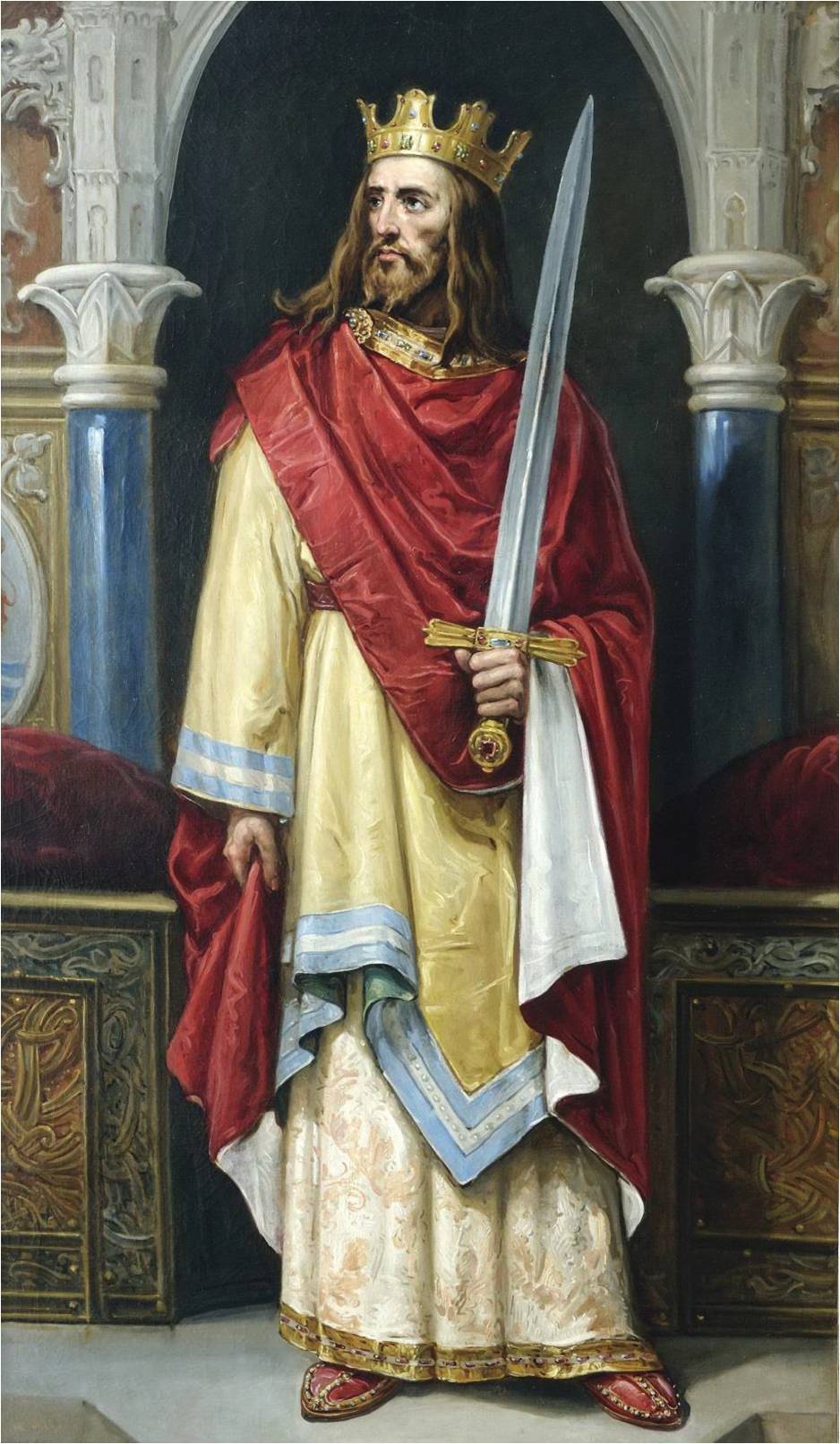
John Enriquez II of Trastámara was born in Toro on 6 March 1405 from the mariage of Henry III – el Enfermo ( The ill /Not firm)-of Castilla y Leon and Catherine of Lancaster, niece of the King of England. On birth, he was appointed prince of Asturias, making him the legitimate heir to the throne. In 1406, his father, Enrico, died leaving the throne to the little boy, almost two years old at the time, under the regency of his mother and his uncle, Ferdinando. The two regents divided the kingdom of Castilla, Catherine would have ruled the north: Galicia, Asturias, Cantabria, Rioja and north of Castilla, while Ferdinand would have the administration of Extremadura: part of Andalusia, part of Murcia and south of Castilla . The remaining parts of Andalusia and Murcia were in the hands of the Moors of the Sultanate of Granada, ruled by the Nasrid dynasty.

Ferdinand’s regency, having made use of excellent advisers and officials, distinguished himself for his prudent management of state affairs; following in the steps of his brother, the war against the kingdom of Granada continued and he behaved with great value in conquering Antequera, such was his worth that he was nicknamed “el d’Antequera”. On the contrary, Caterina did not rule as well: she entrusted to an astute and unscrupulous councilor, Eleonora Lopez of Cordoba, who enriched herself, increasing her properties until she was accused and removed from the court, in 1412.

In 1411, Ferdinand in the name of John II, entered into peace with the king of Portugal, John I, ending the war that began in 1383.
During his regency, Ferdinand made sure that John II, still a minor, was promised in marriage to his daughter Maria, nine years older.
In 1410, the king of the crown of Aragon and king of Sicily, Martin the Elder, great-uncle of John – as he was his grandmother’s brother – died, opening a dispute for the succession that saw his uncle Ferdinand among the pretenders to the Aragonese throne and in the two years that followed, known as the Aragonese interregnum, the latter had to intervene in Aragon, to defend his interests.
With the risk of a civil war, the cortes of Catalonia, Valencia and Aragon decided on an arbitration, which led to the Caspe Compromise of 1412.
After the compromise of Caspe (1412), his uncle Ferdinand became king of the crown of Aragon and had to abandon Castilla. His mother, Catherine, remained the only regent, but Ferdinand left his three children in Castile: Alfonso (the future king of Aragon Alfonso V), Giovanni (the future king of Aragon and of Navarre, Giovanni II) and Enrico – the infants of Aragon-, who took his place at the helm of the royal family (Trastámara) of Castile and replaced him in the royal council of John II, who helped the regent Catherine, as per the express will of the late King Henry III.

In 1415, Alfonso had to leave Castile to assist his father in the government of Aragon. Ferdinand died in 1416 and Alfonso succeeded him as king of Aragon. Meanwhile, the Infants of Aragon ,Giovanni and Enrico, still in Castilla, often found themselves at odds with the noble faction, headed by Álvaro de Luna, who opposed to their influence on their aunt Catherine in matters of regency.
In 1418, the mother of John II, Catherine, died and the Infants of Aragon were appointed regents, but the king, John II began to have sympathy and finally to lean on the noble Álvaro de Luna, grandson of the archbishop of Toledo.
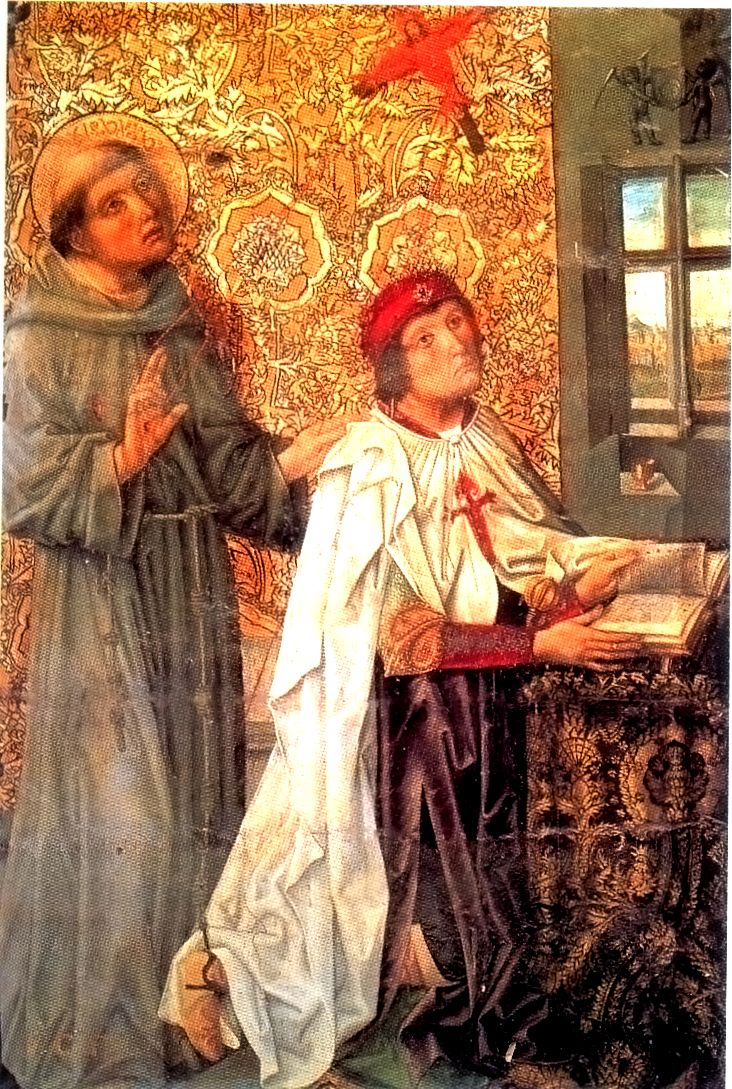
In 1419, John II was declared old enough to rule on his own, but he continued to prefer literature, court pleasures and various pastimes, to the heavy government commitments, always delegating them to Álvaro de Luna.
The King’s cousins, Giovanni and Enrico, continued to be opposed by the Castillian nobles, because they had begun to regain influence not only in the eyes of the King, but also in those of Álvaro de Luna and, step by step, they managed to take control over Giovanni II, perfecting the deed with the coup d’état, regarded as the Golpe de Tordesillas, 1420.
While the court was in Tordesillas, Enrico pretended to leave the city with his personal army, but on the contrary he headed to the royal palace where some accomplices, including the bishop of Tordesillas, opened the doors, allowing them in, thus, advantaged by the surprise, they seized the palace. All their opponents were arrested and Henry went to the king's bedroom, who was sleeping, and informed him of the new situation.

The first consequence of the coup was that, on August 4th, in the cathedral of Ávila, John II married his first cousin, the sister of the Infants of Aragon, (Henry, John and the king oof Aragon, Alfonso V), Maria, to whom he was promised when he was a child.
Henry had thus gained full control over the kingdom of Castilla. This privileged position provoked the reaction of Álvaro de Luna, the king’s personal adviser, who, having agreed with Giovanni, Henry’s brother, in June 1422, had him arrested in Madrid, and had all the properties requisitioned and him stripped of the noble titles.
In 1423, Álvaro de Luna he was appointed constable of Castilla and held power for a few years.
Thanks to the pressure exerted by the king of Aragon, Alfonso V the Magnanimous – he had threatened to invade Castile- Henry was released in 1427 and all his titles were restored to him.
Once released, Henry, along with his brother John, continued to interfere in the matters of the kingdom of Castilla. In 1429, Alfonso V invaded the cousin’s kingdom ,thus starting a war which ended with the treaty of Majano (Treguas de Majano) in July 1430, putting a end to the Aragonese invasion of Castilla. Henry and John were exiled to Aragon and all their properties in Castilla were confiscated.
In 1431, John II and Álvaro de Luna resumed the war against the Sultanate of Granada and, after occupying Jimena de la Frontera, the Castilian troops advanced towards the capital of the kingdom of the Moors. The Castilian army reported a victory in the battle of La Higueruela on 1 July of 1431, though they weren’t able to reach Granada.
Alvaro’s power was constantly growing, causing discontent among the high nobility, and some decisions (such as the arrest of Pedro Manrique, in 1437), gave rise to a rebellion; Giovanni, now king of Navarre, had been rehabilitated in 1436, and the nobility returned to support the Infants of Aragon, who, in 1438, returned for the last time to Castile, regained power and exiled Álvaro de Luna, in the course of the following year.
Álvaro, however, returned, reorganized his faction and, after a series of meetings and treaties, following the coup d’etat of Rámaga (King John II was taken prisoner by his cousin John) in 1443, he arrived at the decisive clash, in the battle of Olmedo, on May 14, 1445 (where the infants of Aragon were defeated), a battle that decreed their definitive exile from Castilla; Henry died shortly after for gangrene, while John, whose wife had died, took care of the kingdom of Navarre.
Despite this victory, the nobility continued to hinder the work of the king and his constable, Álvaro de Luna.
After Maria of Aragon died in 1445, John II remarried, on August 17, 1447, in Madrigal de las Altas Torres with Isabella of Portugal.

From this moment, given that the queen had a notable ascendancy over the king, John sided with the party of the nobles, making the life of Álvaro de Luna increasingly difficult, until he was arrested and tried for witchcraft. Found guilty, he was sentenced to death and executed on June 2, 1453.
John II died the following year, most likely assassinated, delivering a rickety throne to his son Henry IV, a kingdom whose power was firmly in the hands of the high nobility, to whom the king did not have the strength (and not even the character) to object.
John II died in Valladolid on 20 July 1454 and was buried in the Charterhouse of Miraflores, in Burgos.

 Simple History